
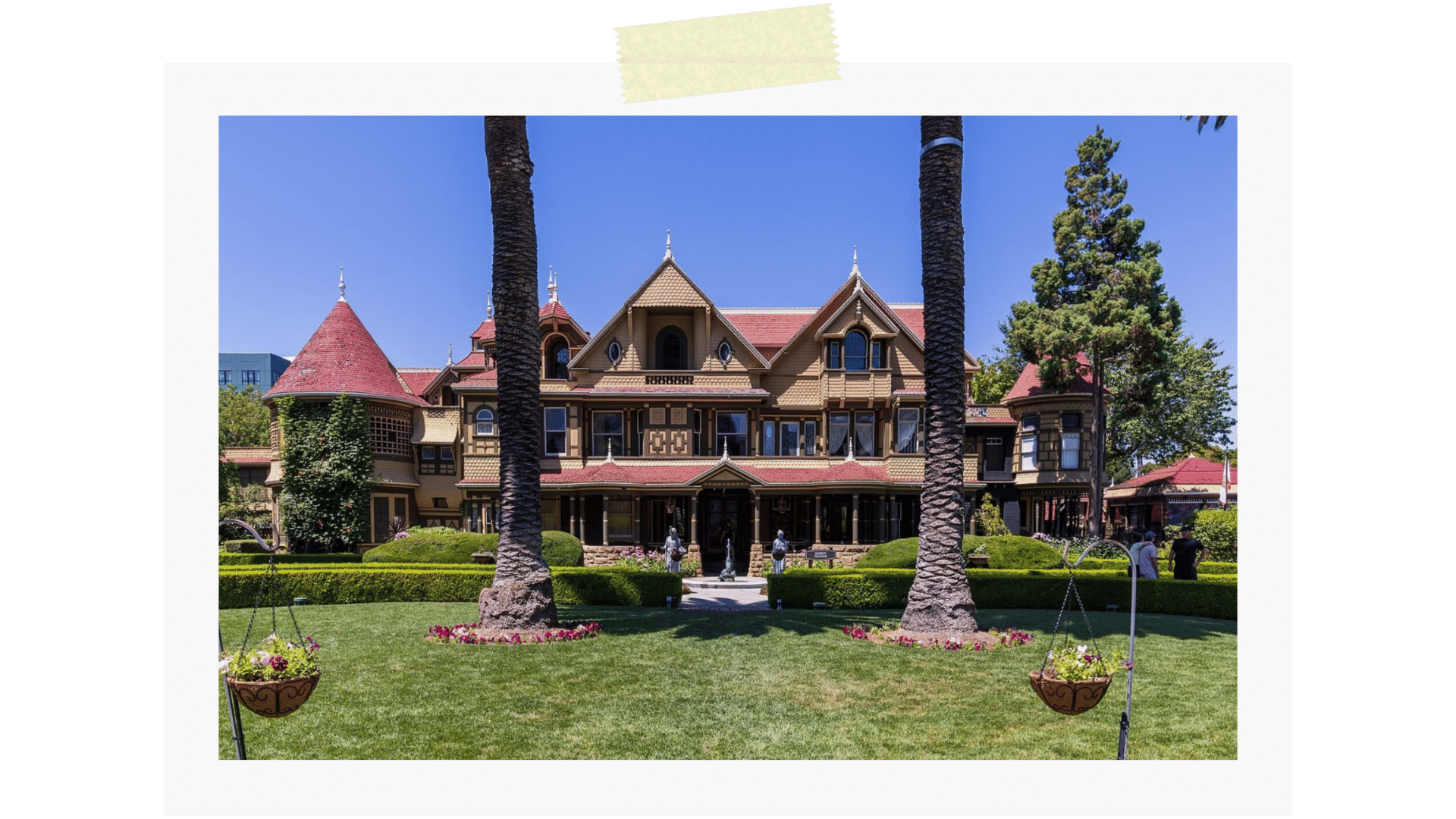
Before we get into the mystery, we have to start with the history.
Because the Winchester Mystery House is not just a haunted mansion story. It is also a story about wealth, invention, grief, obsession, architecture, marketing, and maybe, depending on who you ask, ghosts.
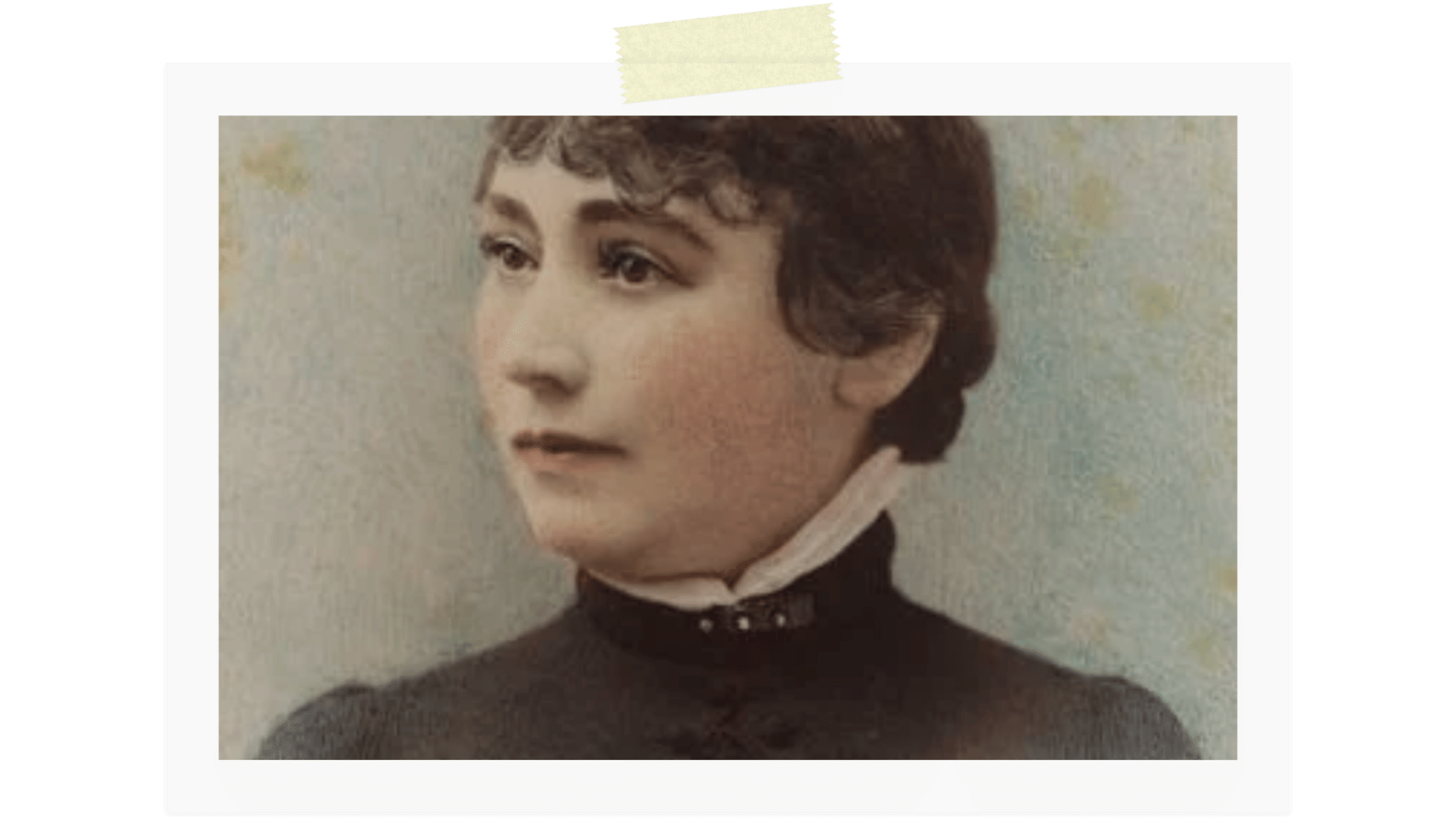
At the center of it all is Sarah Lockwood Pardee Winchester, a woman whose life became tangled with one of the most famous firearms in American history and one of the strangest houses ever built.
Sarah was born in New Haven, Connecticut, in 1839, into a wealthy and progressive family. By many accounts, she was highly educated, especially for a woman of her time. She spoke multiple languages, studied literature, math, and science, and was known in her youth as “the Belle of New Haven.”
In 1862, Sarah married William Wirt Winchester, the son of the founder of the Winchester Repeating Arms Company. And that name, Winchester, carried enormous weight.
The Winchester rifle became one of the defining weapons of 19th-century America. It was used during westward expansion, celebrated by famous figures, and eventually mythologized as “the gun that won the West.” The company’s success brought staggering wealth to the Winchester family.
But money, as it turns out, makes a very poor shield against tragedy.
Four years into their marriage, Sarah and William had a daughter named Annie. She was their only child. But Annie was born with a condition that prevented her body from properly absorbing nutrients, and she died of malnutrition at just six weeks old.
Sarah was devastated.
Many people believe Annie’s death changed Sarah forever, and that the grief was so deep she and William never had another child.
Then, in 1881, tragedy struck again. William Winchester died of tuberculosis at only 43 years old.
By her early 40s, Sarah had lost her baby, her husband, and the life she thought she would have. At the same time, she inherited an enormous fortune, including a major stake in the Winchester company. In today’s money, her inheritance would have been worth well over $100 million.
She was one of the wealthiest women in America.
And she was almost completely alone.
The Medium and the Curse
This is where history starts to blur into legend.
The most famous version of the Winchester story says that after William’s death, Sarah visited a medium in Boston. During that meeting, she was allegedly told something terrifying: the Winchester fortune was cursed.
According to the legend, the spirits of those killed by Winchester rifles had attached themselves to the family. They had already taken her father-in-law and her husband. Now, as the heir to the Winchester fortune, they were coming for Sarah.
The medium supposedly told her there was only one way to survive.
She had to leave the East Coast, travel west, and build a house for the spirits.
But there was one condition. Construction could never stop. If the house stopped growing, Sarah would die. It is a chilling story. It is also the exact point where skeptics start raising their hands. Because there is no solid historical evidence that this meeting with a medium ever happened. No letters. No diary entry. No firsthand account from Sarah. No concrete record.
There is another possible explanation for why Sarah moved west. She suffered from rheumatoid arthritis, and some historians suggest doctors may have recommended a warmer climate to ease her physical pain and emotional distress.
So was Sarah fleeing a curse? Or was she a grieving woman searching for relief?
That question sits at the foundation of the Winchester Mystery House.
The House Begins
In 1886, Sarah Winchester moved to California and purchased a modest eight-room farmhouse near San Jose. At first, it was not a mansion. It was not a tourist attraction. It was not the maze-like architectural beast we know today, but almost immediately, construction began.
And then it kept going and going and going. For decades.
There were no clear blueprints. No master plan. No obvious final version of the house. Instead, the mansion grew room by room, hallway by hallway, staircase by staircase. Sarah was not just paying for renovations from a distance. She was directly involved in the design process, reportedly meeting with workers regularly to discuss the day’s plans.
According to legend, she also spent her nights in a séance room, receiving instructions from the spirits about what should be built next.
Carpenters were said to have worked in shifts, sometimes around the clock. Not because there was a deadline, but because the building itself seemed to be the point.
The house did not simply expand.
It mutated.
Architecture of Confusion
Over the next 38 years, Sarah’s farmhouse transformed into a massive, bewildering mansion.
Today, the Winchester Mystery House is known for its surreal layout and bizarre design choices. The property grew to around 24,000 square feet and includes roughly 160 rooms, 10,000 windows, 2,000 doors, 47 stairways, 47 fireplaces, 17 chimneys, 13 bathrooms, and 6 kitchens.
Inside, the house feels less like a normal home and more like a dream that forgot to obey physics.
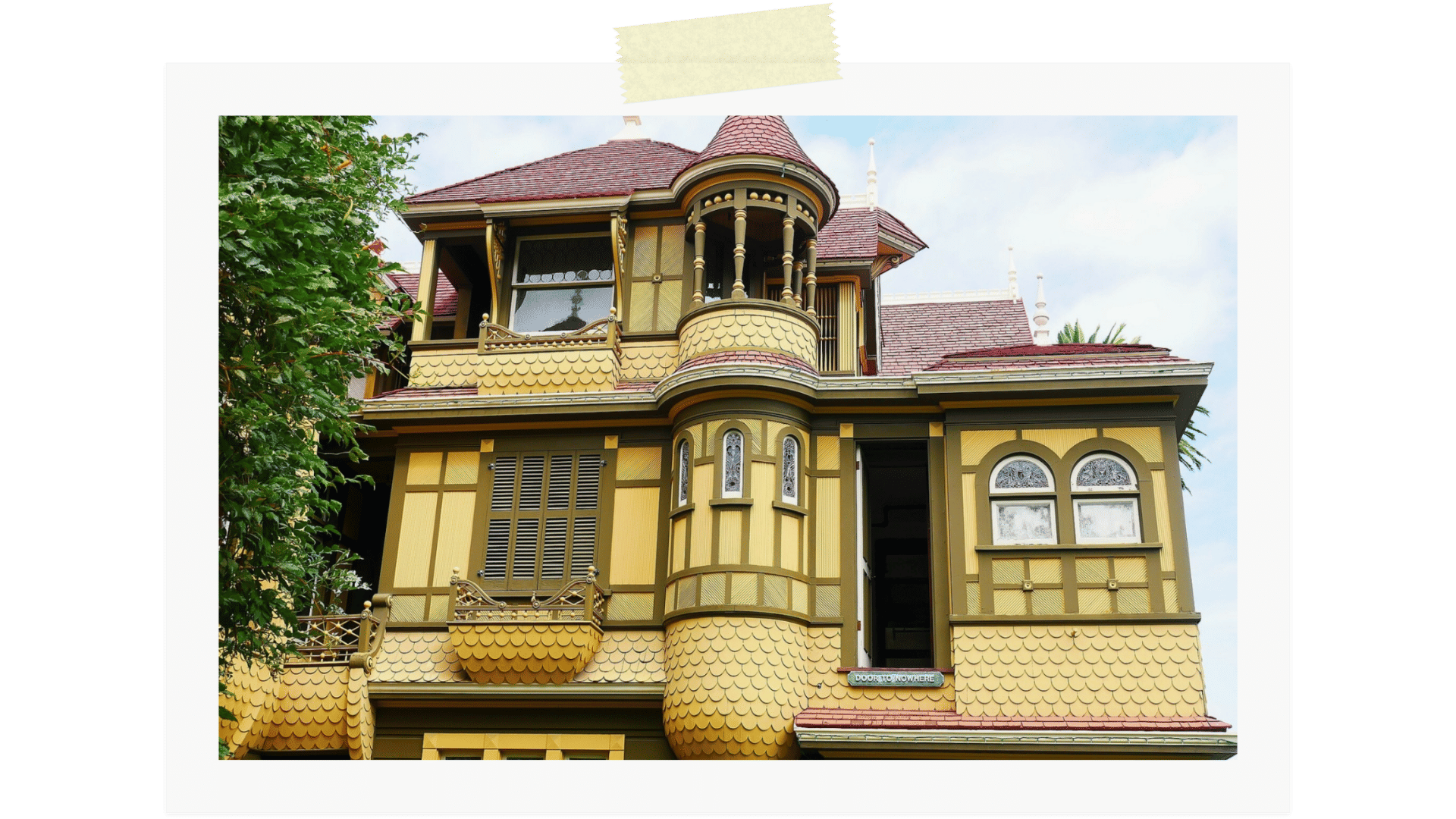
There are staircases that end at ceilings. Doors that open into walls. Doors that open into empty air. Windows built into floors. Hallways that twist and turn without warning. Rooms that seem to exist simply because Sarah decided they should.
There are also strange repeating details throughout the house. The number 13 appears again and again. There are 13 bathrooms. Some staircases have 13 steps. Certain rooms contain 13 panels. The séance room reportedly has 13 hooks. Even the driveway has been associated with 13 palm trees.
Naturally, this has fed into the legend. Was Sarah obsessed with the number 13 because of superstition? Was she following instructions from spirits? Was she trying to confuse ghosts by building a mansion-sized labyrinth? Or was she simply an eccentric, wealthy woman with unusual taste and unlimited resources?
The truth may be more complicated than any single explanation.
Because Sarah Winchester was not some cartoonish recluse scribbling nonsense on blueprints by candlelight. She was educated, intelligent, progressive, and deeply involved in her estate. She paid workers well, helped support their families, hired people of different races, and funded tuberculosis care for patients regardless of wealth or background.
The house may be strange, but Sarah herself was not stupid. That makes the mystery more interesting.
If she was capable of thoughtful design, why does so much of the mansion feel chaotic?
The Earthquake and the Sealed Rooms
In 1906, a massive earthquake struck the San Francisco Bay Area. The Winchester estate survived better than many structures, but it did not come through unharmed.
The mansion’s seven-story tower collapsed. The north wing suffered major damage. Sarah herself had been sleeping in the Daisy Bedroom when the earthquake hit, and she became trapped inside as the building caved around her.
Workers reportedly had to spend hours digging through the wreckage and prying open the door to rescue her. Afterward, Sarah did not fully repair the damaged section of the house. Instead, she sealed off parts of it. Some people see this as another mysterious decision. Others see something painfully human.
Maybe Sarah simply could not face the trauma of that room again.
And this earthquake may explain some of the house’s strangest features. Some staircases and doors that now appear to lead nowhere may have once connected to parts of the mansion that were later destroyed, removed, or sealed away.
In other words, what looks like ghost architecture may partly be disaster damage frozen in time.
Sarah’s Death and the Birth of a Legend
Sarah Winchester died in 1922 of heart failure and according to the legend, construction stopped immediately.
Not gradually. Not neatly. Not after the last project was finished. It stopped mid-motion. Nails were supposedly left half-pounded into wood. Projects were abandoned. The mansion became a strange monument to unfinished work. After Sarah’s death, the house was sold. The new owners reportedly considered turning the property into a recreational attraction. Eventually, the mansion became a public curiosity, and tours began.
And honestly, it is not hard to see why. A grieving heiress. A rifle fortune. A mysterious mansion. Séances. Ghosts. A house that never stopped growing.
That story sells itself. Almost as soon as tours began, ghost stories followed. Visitors and staff reported cold spots, strange noises, apparitions, footsteps, whispers, and the feeling of being watched.
The Winchester Mystery House was no longer just a strange mansion. It became a haunted American icon.
Modern Hauntings
Today, the Winchester Mystery House is often listed among the most haunted places in the United States.
Visitors have reported disembodied footsteps echoing through empty halls. Some claim to hear whispers when no one is nearby. Others describe sudden temperature drops, doors opening or closing on their own, and distant sounds that resemble gunshots.
Staff members have shared stories of tools going missing and later reappearing in unexpected places.
Then there are the apparitions.
One of the most famous is a man in work clothes sometimes referred to as Clyde. He has reportedly been seen pushing a wheelbarrow or working near fireplaces, as though still maintaining the mansion long after death.
Others claim to have seen a woman in black, believed by some to be Sarah herself.
Shadowy figures have been reported in rocking chairs, near windows, in doorways, and just out of sight. Even people who do not believe in ghosts often describe the mansion as deeply unsettling.
Not necessarily terrifying in a jump-scare way. More like the house is paying attention.
Quietly. Patiently. With 10,000 windows, maybe it has enough eyes.
So What Really Happened?
There are a few major theories about Sarah Winchester and her strange mansion.
The first is the classic ghost story: Sarah believed she was haunted by the spirits of people killed by Winchester rifles. If the medium story is true, then the house may have been a spiritual defense system, built to confuse, appease, or shelter the dead.
It is the most famous version of the tale. It is also the hardest to prove.
There is no confirmed evidence that Sarah ever met with the medium. No proof that she believed vengeful spirits were hunting her. That does not mean it did not happen, but it does mean we should treat it as legend rather than fact.
The second theory is grief.
Sarah lost her daughter. Then her husband. She inherited wealth, but that wealth came attached to loneliness, pressure, and a family legacy tied to death. Maybe the house became her way of surviving. A project. A distraction. A private world where she could keep moving, keep planning, keep building, and never sit still long enough for the grief to swallow her.
In that version, the mansion is not a trap for ghosts. It is grief made out of wood, glass, and nails.
The third theory is architectural chaos without the supernatural.
Sarah had no formal architectural training. The house was worked on for decades, by different crews, with changing plans and no single master design. Add the damage from the 1906 earthquake, sealed-off rooms, removed sections, and endless renovations, and suddenly the confusing layout becomes less paranormal and more practical.
Still weird. But practical.
The fourth theory is myth-making.
After Sarah’s death, the house became a tourist attraction. And let’s be honest: “wealthy widow builds unusual house” does not sell nearly as many tickets as “haunted heiress builds endless maze to escape the ghosts of rifle victims.”
It is very possible that much of the ghost story grew after Sarah died. Rumors, marketing, local legends, visitor experiences, and decades of retelling may have created the version of Sarah Winchester we know today.
The haunted widow. The cursed heiress.
The woman who built and built and built because death was waiting for the hammering to stop.
The Mystery That Refuses to Die
So, what do you believe? Was Sarah Winchester haunted by the dead? Was she trying to outrun a curse built into the Winchester fortune? Did she create a mansion-sized maze to confuse spirits? Or was she simply a brilliant, grieving, eccentric woman who had the money to turn her pain into architecture?
Maybe the scariest version is not that Sarah was haunted by ghosts. Maybe it is that she was haunted by loss. The Winchester Mystery House remains strange because it refuses to become one clean story. It is history and legend. Fact and folklore. Tourist attraction and trauma site. Architectural marvel and architectural fever dream. And maybe that is why people are still drawn to it. Because somewhere inside those twisting hallways, sealed rooms, dead-end staircases, and doors to nowhere, the house seems to ask the same question over and over:
Was this built for the spirits? Or was it built because Sarah Winchester could not stop remembering? Either way, the house still stands.
And somehow, even now, it still feels unfinished.
About This Episode
This blog post is adapted from our Season 2 episode of the Mystery Date Podcast — “The Winchester Mansion | America's Most Haunted House”, part of our A Haunting season exploring the strange and mysterious side of the paranormal.
🎧 Listen to the full episode: Mystery Date Podcast
👕 Grab themed merch: Mystery and Co.
📬 Send us your local legends: mysterydatepodcast@gmail.com | (216) 770-4881