
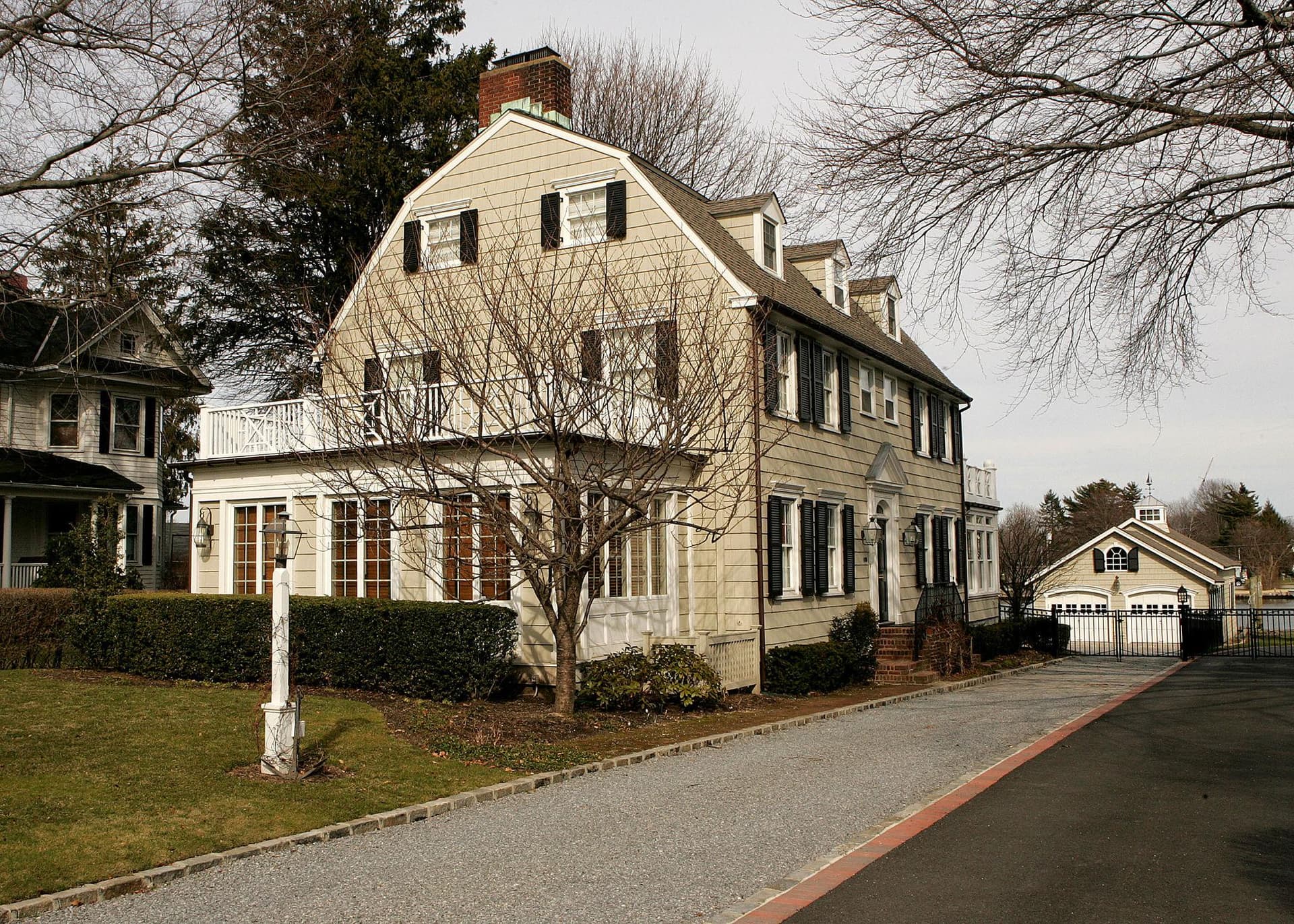
In December of 1975, George Lutz and Kathleen Lutz purchased a Dutch Colonial home at 112 Ocean Avenue in Amityville, New York. They were not thrill-seekers. They were newly married, blending their family, chasing stability and something that felt like a fresh start.
The house was spacious, picturesque, and surprisingly affordable.
The reason for that affordability was no secret.
Just over a year earlier, six members of the DeFeo family had been murdered inside the home by Ronald DeFeo Jr..
Despite the tragedy attached to the address, the Lutzes believed they could build a life there. Kathleen later described the home as “beautiful” and full of promise. George, however, admitted that from the very beginning there was something unsettled in the air. In later interviews, he would say, “I didn’t feel afraid exactly. It was more like the house was watching us.”
What followed over the next 28 days would become one of the most debated paranormal cases in modern history.
The First Signs: A House Blessed… and Questioned

Shortly after moving in, the Lutz family arranged for the house to be blessed by a priest. Accounts differ regarding what occurred during that visit. The Lutzes claimed that during the blessing, the priest heard a male voice telling him to “get out.” They also alleged he later developed blisters on his hands and refused to return.
The priest himself never publicly confirmed the more dramatic claims. However, he did acknowledge advising the family not to use one of the upstairs rooms after his visit.
For the Lutz family, this moment marked a turning point. What began as minor discomfort now felt like something tangible.
Something present.
The Haunting at 112 Ocean Avenue: A Timeline
Week One: Unease Takes Root
The family moved in on December 18, 1975. The first days were quiet, but not peaceful.
Almost immediately, George began waking in the middle of the night. Soon, he noticed a pattern. Every night, his eyes would open at exactly 3:15 a.m.
“It wasn’t random,” he later said. “It was exact. Like a switch was being flipped.”
Cold spots were reported early on. Certain rooms remained freezing despite the heat running constantly, especially the sewing room and one of the upstairs bedrooms. Kathleen described these spaces as feeling “emotionally wrong,” not just physically cold. “You could feel it before you stepped inside.”
After the priest’s blessing, the tone of the house reportedly shifted. What had been subtle became insistent.
Week Two: The House Becomes Active
During the second week, the Lutzes claimed the disturbances intensified.
They reported hearing footsteps pacing above them at night. Doors allegedly slammed shut on their own. George claimed he would find doors locked that he knew had been left open.
Kathleen began experiencing vivid nightmares and waking visions. She described feeling drawn to the DeFeo children’s former bedrooms, sometimes standing in the doorway without realizing how long she had been there. “It felt like the house wanted me to remember something,” she said.
It was also during this time that the children began speaking about an imaginary friend named “Jodie.” They described Jodie as a pig-like creature with glowing red eyes.
George later claimed to have seen red eyes staring at him from outside a window in the darkness. Skeptics have suggested reflections or nearby structures could explain the sighting. But for George, it was confirmation.
“Whatever Jodie was,” he said, “it wasn’t imaginary. It didn’t behave like an imaginary friend. It behaved like something watching us.”
Meanwhile, George’s physical state deteriorated. Despite the freezing New York winter, he insisted on keeping windows open and chopping wood obsessively.
“I felt like I was burning from the inside out,” he later said. “I couldn’t get warm, no matter what.”
Friends who visited described him as tense, withdrawn, and volatile.
Week Three: Psychological Collapse
By the third week, the alleged activity escalated.
Kathleen claimed furniture moved overnight. Crucifixes were reportedly found turned upside down. No photographs were ever produced to confirm these claims.
Then came one of the most infamous elements of the story: black, gelatinous slime.
According to the Lutzes, the substance appeared on walls and ceilings, particularly in stairwells and bedrooms. Kathleen described it as thick and foul-smelling, with no visible source.
Critics later argued it could have been condensation, residue, or misinterpretation. The Lutzes insisted it was something else entirely.
George’s mental state continued to unravel. He claimed he began hearing voices urging him to harm his family.
“It wasn’t a suggestion,” he said later. “It was a command.”
The parallels to the DeFeo murders weighed heavily on him. He began to fear history was repeating itself.
Week Four: The Breaking Point
Sleep became nearly impossible.
Loud bangs echoed through the house at night. Doors reportedly shook in their frames. The home allegedly grew unnaturally cold, even with the heat running at full power.
On their final night in January 1976, the Lutz family described what they believed was a full eruption of activity. Violent noises filled the home. Freezing air swept through rooms. The sense of being watched became overwhelming.
George later said, “That was the first night I truly believed we might die there.”
They left abruptly.
Furniture, clothing, personal belongings were abandoned. Kathleen later summarized their departure in a line that would echo through pop culture:
“We didn’t move out. We ran.”
The Warren Investigation
In early 1976, the story began attracting national attention. Among those drawn to Amityville were famed paranormal investigators Ed Warren and Lorraine Warren.
They investigated the house in March 1976, after the Lutz family had already fled.
Lorraine Warren later said, “This was not a human spirit. Whatever was there had never been human.”
During a séance held inside the home, Lorraine claimed to experience intense physical pain and vivid visions tied to the DeFeo murders. Ed Warren described the atmosphere shifting dramatically, stating, “This thing did not want us there.”
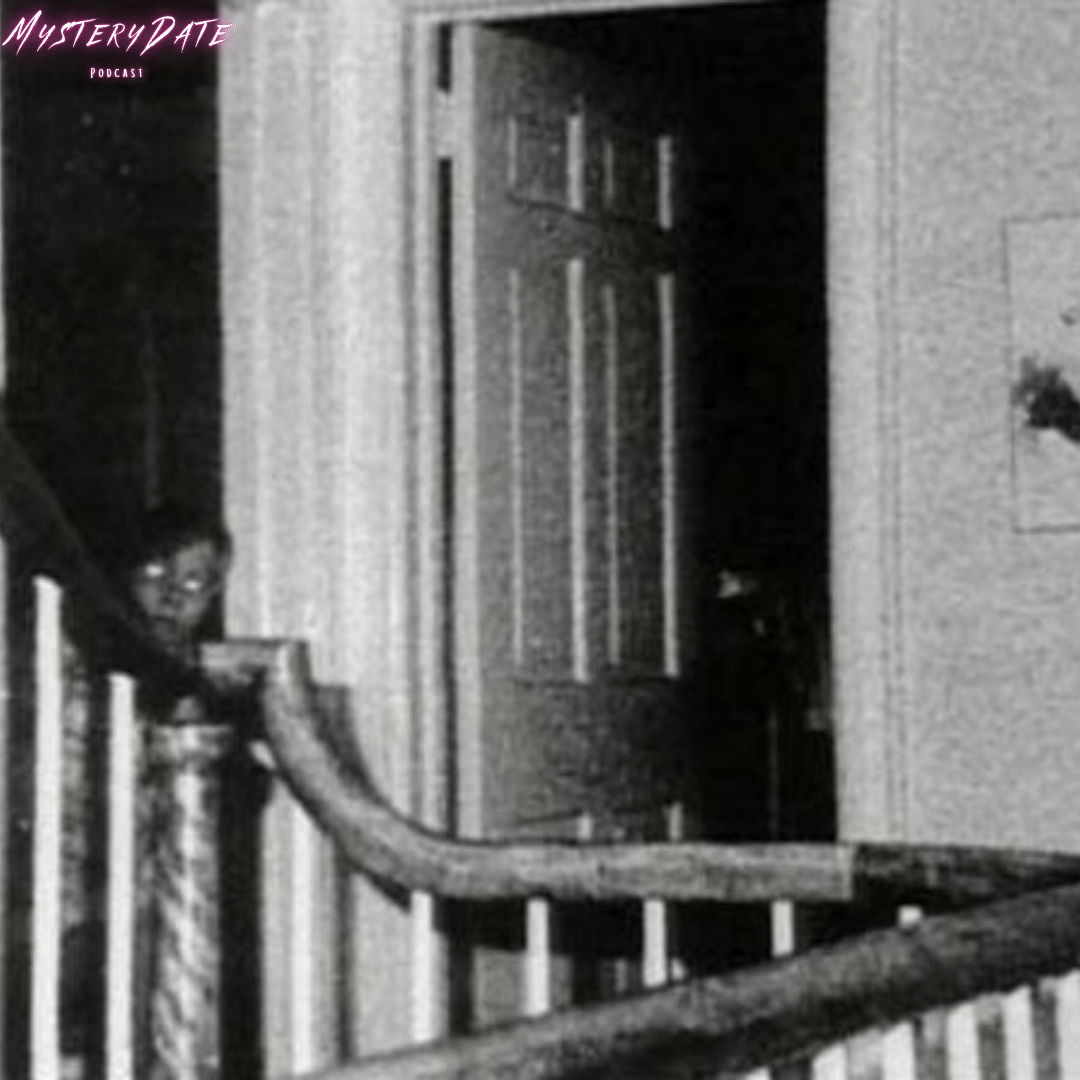
One photograph taken that night became especially famous. It appeared to show a young boy peering out from an upstairs doorway. The Warrens identified the figure as possibly one of the DeFeo children.
Skeptics argued the image could depict a living person present at the investigation or a photographic anomaly. No definitive conclusion was ever reached.
After the investigation, the Warrens declared the house dangerously haunted and advised the Lutz family never to return.
Not everyone present agreed with their conclusions.
And the controversy deepened.
Skepticism, Hoax Claims, and Fractures in the Story

Almost immediately, critics began challenging the Lutz account.
Within a year, the family had worked with author Jay Anson to produce the 1977 bestseller The Amityville Horror. The book blurred the line between documentation and dramatization, presenting disputed claims as fact.
Perhaps the most damaging accusation came from the Lutzes’ former attorney, William Weber. Weber later claimed that parts of the story were fabricated during conversations with George Lutz. He alleged that they discussed shaping a narrative that could become a book and film, famously stating, “We created this horror story over many bottles of wine.”
George Lutz denied fabricating the experience. He acknowledged dramatization in the book but maintained the core events were real.
Investigators also noted the absence of physical evidence. Reports of black slime, structural damage, and violent disturbances were never verified by police or inspectors.
Subsequent homeowners reported no paranormal activity at all.
Psychological explanations emerged. Some researchers suggested stress, financial strain, knowledge of the DeFeo murders, and suggestibility may have created a feedback loop of fear and interpretation. Even George’s 3:15 a.m. awakenings were attributed by sleep experts to stress and circadian rhythm disruptions rather than supernatural forces.
As one critic summarized, “The legend grew faster than the evidence.”
A Case That Refuses to Close
The Amityville case exists in a strange space.
It has never been conclusively proven.
It has never been conclusively disproven.
Each claim invites a counterclaim. Each piece of evidence dissolves under scrutiny or lingers just long enough to keep belief alive.
In many ways, the story of Amityville says less about ghosts and more about how narratives evolve when fear, trauma, media attention, and opportunity collide.
The Legacy of Amityville
Regardless of its authenticity, Amityville became a cultural phenomenon. The house transformed from crime scene to symbol.
The story inspired numerous films, sequels, reboots, documentaries, and pop culture references, beginning with The Amityville Horror and continuing for decades.
The house itself has since been renovated, renumbered, and sold multiple times. Current and former owners have publicly stated they experienced nothing unusual.
Yet the name “Amityville” remains shorthand for haunted houses everywhere.
Whether the Lutz family experienced a genuine haunting, succumbed to fear amplified by suggestion, or found themselves swept into a story that grew beyond their control, the case endures.
Not because it offers answers.
But because it leaves us with questions.
And sometimes, questions echo louder than any ghost story ever could.
About This Episode
This blog post is adapted from our Season 2 episode of the Mystery Date Podcast — “Amityville Hauntings | The Most Infamous Ghost Story”, part of our A Haunting season exploring the strange and mysterious side of the paranormal.
🎧 Listen to the full episode: Mystery Date Podcast
👕 Grab themed merch: Mystery and Co.
📬 Send us your local legends: mysterydatepodcast@gmail.com | (216) 770-4881