
The Ancient Middle Managers: A Biography of the Invisible
To understand the demon of the modern imagination, we must first strip away the red suit, the pitchfork, and the concept of "pure evil." In the cradle of civilization—Ancient Mesopotamia—the beings we now call demons were not moral actors. They were the "Middle Managers" of the universe.
In the Sumerian, Akkadian, and Babylonian worldviews, the universe was a crowded place. The line between a god and a demon was razor-thin, often determined only by how much paperwork they had to do for the higher authorities. They used the term udug (OO-doog) or utukku (oo-TOOK-koo) to describe a class of spirits that were essentially the "unseen workers" of reality. They were the personification of the variables humans couldn't control. If you were struck by a sudden, wasting fever, it wasn't because you had sinned; it was because a specific entity, like the Asag (AH-sahg), had crossed your path. The Asag was described as a creature so hideous that his presence alone made the fish boil in the rivers, yet he wasn't "evil" in a rebellious sense—he was simply a manifestation of the harsh, scorching heat of the desert.
During this era, demons were viewed with a pragmatism that we find jarring today. They were amoral forces of nature. Much like a modern person doesn't call a hurricane "evil" but prepares for its impact, the Mesopotamians didn't judge demons; they managed them. They believed that these spirits lived in the "wild places"—the ruins of old cities, the deep deserts, and the dark corners of the home. This is why we see the first instances of "magical architecture." Houses were built with specific thresholds and protective figurines buried under the doorframes to "distract" or "repel" these middle managers.
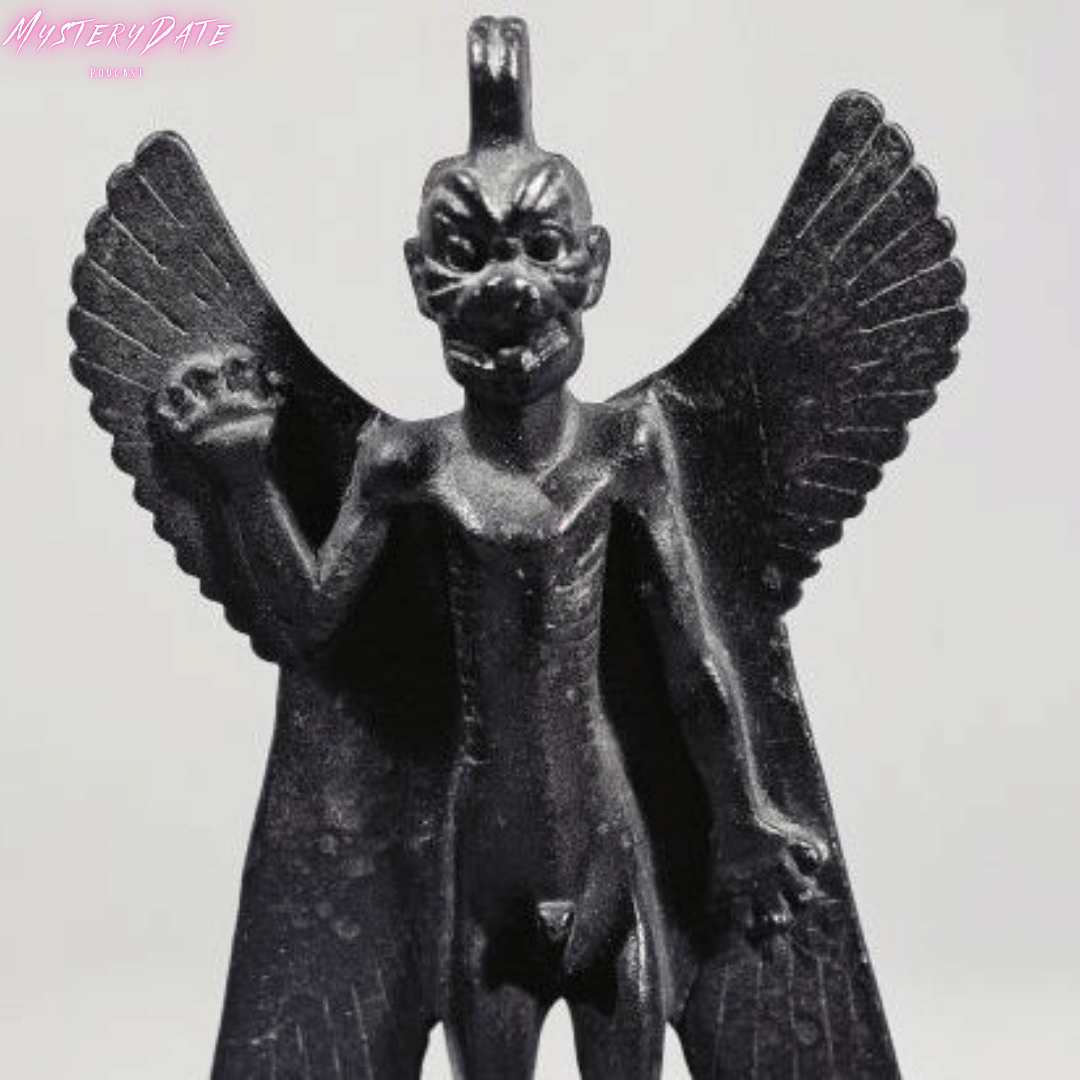
The most famous of these figures is Pazuzu (pah-ZOO-zoo). To a modern audience, Pazuzu is the face of ultimate terror—the entity that possessed a young girl in The Exorcist. But to the ancient Assyrians, he was a vital, if terrifying, protector. As the King of the Wind Demons, Pazuzu represented the dry, scorching winds from the southwest that brought locusts and famine. However, because he was the king of these winds, he had the power to command them to stop. Most importantly, he was the only force strong enough to drive away the demoness Lamashtu (la-MAHSH-too).
Lamashtu was the true nightmare of the ancient world; she was believed to creep into houses at night to steal newborns or cause miscarriages. To combat her, mothers would wear amulets of Pazuzu’s monstrous face—complete with his bulging eyes, canine teeth, and scorpion tail. The logic was simple: to scare away a monster, you invited a bigger monster to stand guard at the door. In this era, a demon was a tool—dangerous and volatile, but a necessary part of the natural order.
The shift toward "Evil" with a capital E was not a religious flip of a switch, but a slow, tectonic movement in human thought. It began largely with Zoroastrianism in ancient Persia around 1500 BCE though many scholars place it later. This was perhaps the first time human history saw a true "Cosmic Dualism." The universe was no longer a messy collection of spirits doing their jobs; it was a battlefield. The world was split into a total war between the Light (Ahura Mazda (ah-HOO-ra MAZ-da)) and the Dark (Angra Mainyu (ANG-ra MINE-yoo)).
Under this new system, the neutral spirits of the old world were forced to pick a side. If you weren't an agent of the Light, you were a Daeva (DAY-vuh)—a demon. This binary—the idea that the supernatural world was divided into a "Team Good" and a "Team Evil"—was the crucial blueprint that would eventually inform the Abrahamic traditions. It turned the daimon (DIE-moan) (a Greek term for a guiding spirit or a source of inspiration) into the "demon" (an enemy of the divine). We moved from a world of "Middle Managers" who were just doing their jobs, to a world of "Rebels" who were actively trying to sabotage the human soul. This transition changed the demon from a force you could negotiate with into an enemy you had to defeat.
The Bureaucracy of the Abyss
As we move from the ancient deserts into the cathedrals and libraries of the Middle Ages, the concept of the demon underwent a radical transformation. No longer were they seen as unpredictable forces of nature; they were now viewed as part of a highly disciplined, almost military bureaucracy. If Heaven was a kingdom of perfect order, then Hell, by necessity, was its dark, distorted reflection. This was the birth of "Demonology" as a formal—and dangerous—field of study.
In the eyes of the Church and Renaissance occultists, demons were "fallen angels." This is a crucial theological point: it means that despite their fall, they never lost their celestial nature. They kept their immense intelligence, their immortality, and most importantly, their rank. This led to the creation of the Infernal Hierarchy, a system so complex it makes modern corporate org charts look simple.
One of the most significant works in this field was the Pseudomonarchia Daemonum, published in 1577 by Johann Weyer (YO-hahn VIRE). Weyer didn't just list names; he acted as a census taker for the abyss. He claimed that Hell was divided into 66 legions, each commanded by a specific "Duke" or "Prince," and he estimated the total population of demonic entities at exactly 4,439,622. This wasn't just a flight of fancy; it was a reflection of the medieval belief that the universe was a place of absolute law. To defeat a demon, you had to understand its "jurisdiction."
The most enduring of these structures is the Seven Princes of Hell, where each demon is assigned to one of the Seven Deadly Sins. This turned the abstract concept of "evil" into a targeted campaign against the human soul:
Lucifer (Pride): The CEO. As the "Light Bringer" who fell from the highest height, he oversees the sin that started it all. He is the architect of the rebellion.
Mammon (Greed): The CFO of the abyss. He isn't interested in your soul—initially. He is interested in your bank account, your possessions, and the way material wealth can distract you from the divine.
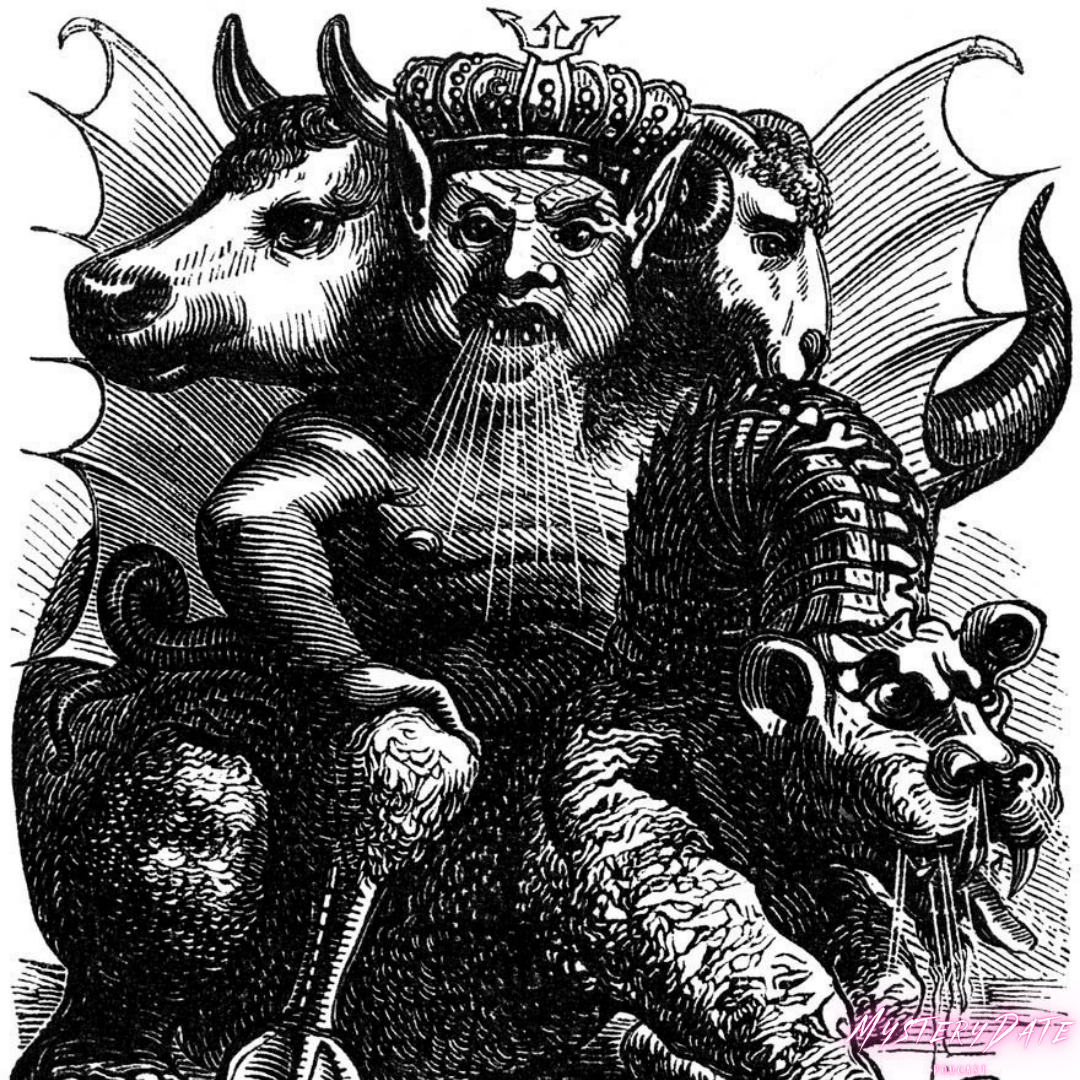
Asmodeus (Lust): Often depicted in the Lesser Key of Solomon as a creature with three heads (bull, man, and ram), he is the specialist in the corruption of the heart and the flesh.
Beelzebub (Gluttony): The "Lord of the Flies." He represents the decay that comes from excess, whether it be food, power, or influence.
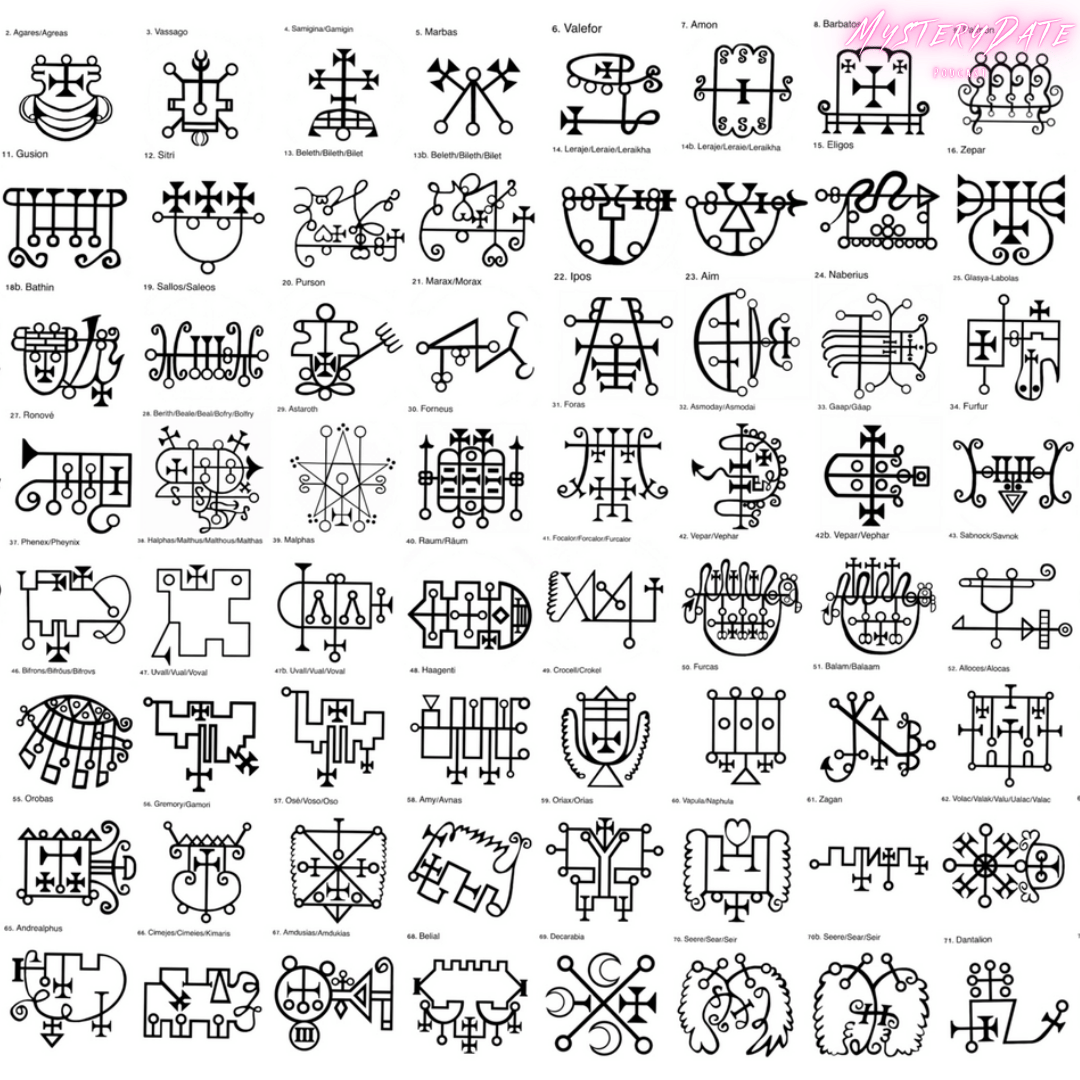
By the 17th century, the Ars Goetia (ARZ go-AY-tee-uh)—part of the famous grimoire known as The Lesser Key of Solomon—took this a step further by listing the 72 pillars of the demonic monarchy. These entities held titles like "King," "Marquis," and "President." For example, the demon Buer (BOO-er) was a "President" who taught philosophy and logic, while Stolas (STOW-las) was a "Prince" who taught astronomy and the properties of herbs.
This professionalization of demons had a terrifying implication for the people of the time. It meant that a haunting or a possession wasn't a random accident. It was a "hit" performed by a specialist. If you were being tormented, you weren't just fighting a monster; you were being targeted by a high-ranking official of a rival kingdom who had spent millennia perfecting the art of the "legal loophole" to gain access to your life.
In the religious context, this is why the ritual of Exorcism is so heavily focused on the "Interrogation." A priest must force the demon to reveal its name and its rank. In the legalistic world of demonology, the name is the contract. Once the priest knows who the demon reports to in the hierarchy, he can use the "authority of the higher office" (God) to effectively fire them from the person’s body. It was a cosmic battle fought with the precision of a courtroom trial.
The Warren Methodology: The Three Stages
When we look at modern paranormal investigation—specifically the work of Ed and Lorraine Warren—we see ancient theological concepts translated into a practical, almost clinical "playbook." The Warrens didn't just believe in demons as abstract concepts; they believed they were tangible, predatory intelligences that followed a calculated, three-stage process to harvest a human soul.
Stage One: Infestation. This is the "hook." It begins with subtle, seemingly random anomalies. In the Hinsdale House, this manifested as the Dandy family hearing footsteps in empty hallways and finding kitchen cabinets standing wide open in the morning. The goal of Infestation is to gain the victim's attention and, more importantly, their fear. The Warrens argued that by acknowledging the presence—by asking "who’s there?" or trying to communicate via a Ouija board—the human effectively grants the entity a "foothold."
Stage Two: Oppression. Once the entity is invited in, it begins the process of breaking the victim down. This is the stage where the activity becomes violent and personal. We see this most clearly in the Smurl Family Haunting, a case the Warrens considered one of the most intense of their careers. The Smurls reported being physically assaulted, pushed down stairs, and pinned to their beds by an invisible weight. But the true danger of Oppression is psychological. The entity targets the "weak link" in a family, inducing deep depression, extreme fatigue, and social isolation. By stripping away a person's mental fortitude, the entity prepares the "shell" of the human body for the final act.
Stage Three: Possession. This is the ultimate goal. The human will has been so thoroughly crushed that the entity can push the soul aside and take control of the physical body. In the Warrens' view, possession is rarely the "end"; it is a means for the demon to cause further chaos and "blasphemy" in the physical world.
But who were these entities? According to the Warrens, they weren't just fighting "generic" evil. They often claimed to be facing specific, ancient adversaries.
In the Hinsdale House, the Warrens identified a "Tall Black Figure" that paced the upstairs hallway. They believed this entity was an Inhuman Spirit—a demon that had never been human—taking advantage of a "thin spot" in the land. This entity didn't just want to scare the Dandys; it wanted to claim the property as a permanent portal.
In the Smurl Case, the Warrens were even more specific. They believed the family was being tormented by a powerful, ancient demon that Ed Warren often referred to as a Behemoth-class entity. This demon was capable of "teleporting" objects and projecting a foul, suffocating odor of sulfur that could be smelled by neighbors blocks away. Ed Warren famously stated that the demon in the Smurl house was so powerful it could withstand multiple minor exorcisms, mocking the priests who tried to cast it out.
Perhaps most famously, the Warrens often spoke of the entity behind the Annabelle doll. While Annabelle is often thought of as a "haunted doll," the Warrens were adamant that a spirit cannot inhabit an inanimate object. Instead, they claimed a demonic entity was "attached" to the doll, using it as a mascot to manipulate people into pitying it. Once the person "accepted" the doll into their home, the demon would move from Infestation to Oppression.
To the Warrens, these weren't just stories; they were a specialized form of spiritual warfare. They viewed themselves as the "scouts" who identified the enemy's rank and file before calling in the "heavy artillery" of the Church for a formal exorcism. Their work remains the bridge between the ancient hierarchies of the past and the modern "investigative" style of the present.
Modern Shadows: Infrasound, Tulpas, and the Digital Demon
While the ancient world saw demons as nature spirits and the medieval world saw them as fallen bureaucrats, the modern age has moved the mystery into the realm of the laboratory and the collective subconscious. Today, researchers, skeptics, and internet theorists offer a different set of explanations for what these "demons" actually are. If they aren't literal fallen angels, then what exactly is the "Tall Black Figure" at the top of the stairs?
The Tulpa Theory: Thought-Forms and Collective Manifestation A popular theory among internet researchers and occultists is the concept of the Tulpa or Egregore. This theory suggests that if enough people focus their mental energy on a specific idea or entity, that entity can actually begin to manifest in reality. It is essentially "crowdsourced" haunting.
The digital age has provided a perfect laboratory for this. Take the "Slender Man" or the "Hat Man." These entities didn't exist in ancient grimoires; we can trace the Slender Man’s origin to a specific 2009 forum post. Yet, thousands of people across the globe now report genuine, terrifying encounters with him. This suggests that demons might not be ancient beings at all, but rather "psychic projections" born from our shared digital folklore. If a million people fear the same shadow, does that shadow eventually gain a life of its own?
The Multi-Dimensional Theory: The "Interdimensional" Intruder Finally, some modern researchers, including the late John Keel (author of The Mothman Prophecies), proposed that demons are actually "ultraterrestrials." This theory suggests that demons are not from a spiritual "Hell," but are inhabitants of a parallel dimension that exists alongside ours.
According to this view, these beings are "energy vampires" that slip through "thin spots" in our reality—often locations with high electromagnetic activity. They don't want your soul in a religious sense; they want your fear because it serves as a source of energy for them to manifest. They are simply biological entities from another plane of existence whose "natural" form is so alien to us that our brains interpret them as the monsters of our religious traditions.
Whether they are glitches in our biology, echoes in the stone, or projections of our collective internet nightmares, these modern theories show that we are still just as obsessed with the shadows as our ancestors were. We may have traded the ritual circle for a microphone and a laptop, but we are still looking into the dark, trying to give the unknown a name.
Conclusion
Whether we view demons as the udug spirits of the desert, the fallen princes of the Catholic hierarchy, or the "glitches" of a tired human brain, one fact remains constant: the Lore of Demons is the story of our relationship with the unknown. We name the shadows so they feel less vast. We give them ranks and stages so they feel predictable. We turn our fears into monsters, because a monster—even a terrifying one—is easier to face than the silence of an empty room.
About This Episode
This blog post is adapted from our Season 2 episode of the Mystery Date Podcast — “The Lore Of Demons | The Names We Shouldn't Say”, part of our A Haunting season exploring the strange and mysterious side of the paranormal.
🎧 Listen to the full episode: Mystery Date Podcast
👕 Grab themed merch: Mystery and Co.
📬 Send us your local legends: mysterydatepodcast@gmail.com | (216) 770-4881